

A Comprehensive Guide to Understanding Heart Health for Black Americans
February's Living A Better Life Resource covers everything from advocating in the doctor's office to practical nutrition swaps, exercise for any ability level, and stress management strategies.

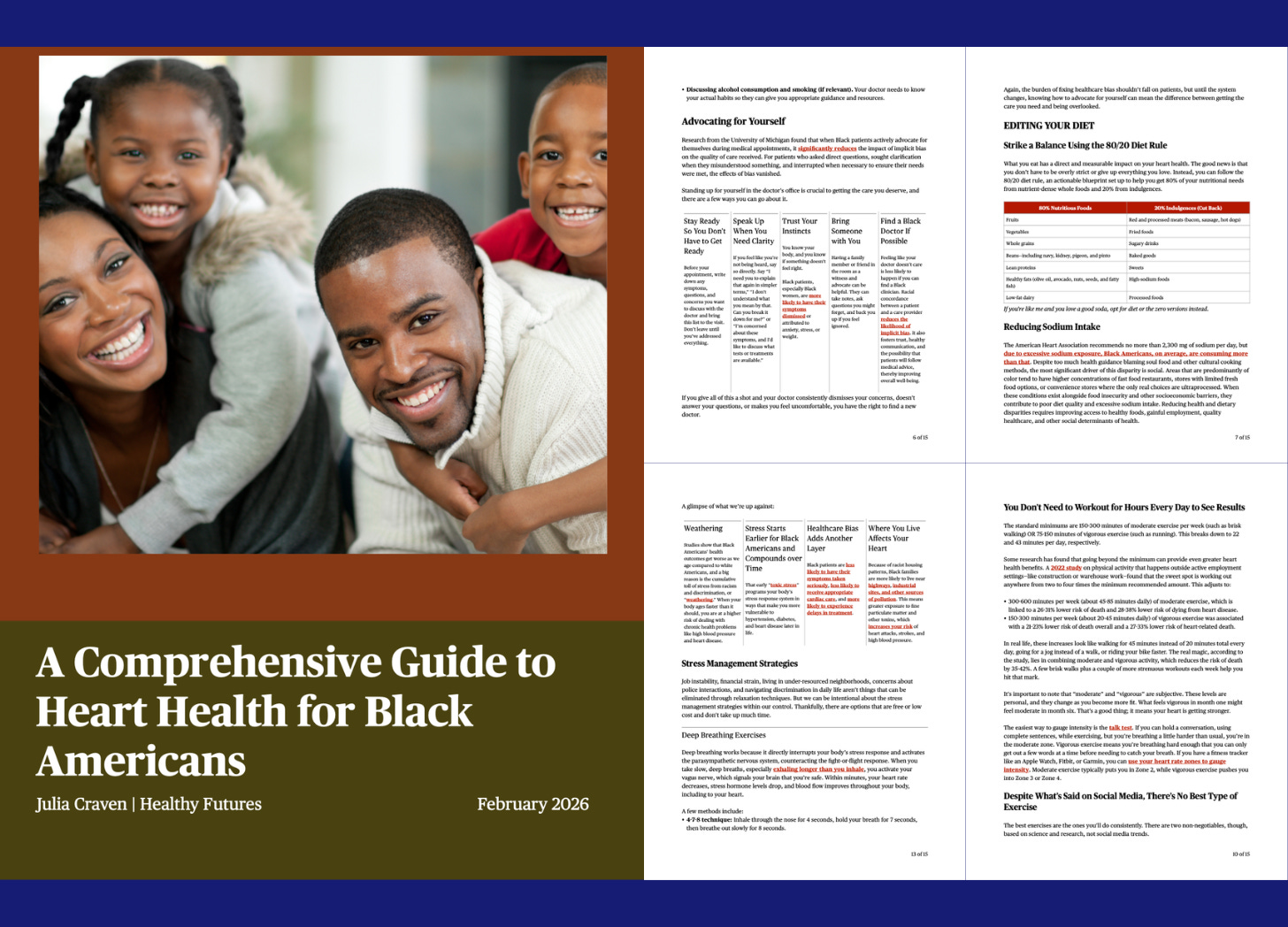
First of all, Happy Black History Month. I feel so honored that God thought enough of me to make me a Black woman, more so than I usually do during this time of year. It’s also American Heart Month, and I thought this was the perfect moment to bring these two commemorations together in a meaningful way using my journalism and research backgrounds.
I don’t think I know a family that hasn’t been affected by heart disease—whether it’s a cousin with high blood pressure, an auntie who had a stroke, or a father who had a heart attack. Within my own family, members on both sides manage high blood pressure daily.
While cardiovascular disease is the leading cause of death for all Americans, Black people are 30% more likely to die from complications than their white counterparts, and we tend to develop heart problems earlier in life and experience more severe outcomes. This is heavily due to historical and systemic factors, which stack the odds against us before we even walk through a doctor’s door.
The good news is that heart disease is largely preventable. If you’re in the early stages, there’s a good chance you can reverse it. If you’ve already suffered a heart attack or other cardiovascular event, you can enact lifestyle changes that stop it from getting worse or happening again.
That’s why I created this guide. For us.


I wanted to make something that acknowledges the systemic barriers we face while providing tools to take control of what we can. It’s my way of being in community with anyone who reads this and making health information more accessible. And while the guide is tailored to center the Black American experience, it applies to anyone looking to better manage heart disease. A rising tide lifts all ships, as they say.
Inside this 15-page comprehensive resource, you’ll find:
What cardiovascular disease actually is and the risk factors that matter most for Black Americans
How to navigate the doctor’s office and advocate for yourself when bias shows up in the exam room
Practical strategies for eating well without giving up the foods you love (using the 80/20 rule)
Exercise plans that work for any fitness level, budget, or physical ability—including resources for people with disabilities
Stress management techniques that address chronic stress
How to read nutrition labels like a pro and spot hidden sodium, sugar, and trans fats
Just like any other edition of the Living A Better Life Resources, there’s no cost to access the guide. You can download it, email it to family members, or print it for a grandparent, auntie, or uncle who isn’t on Substack. But there is a “name your own price” option, should you want to share a few dollars as a gesture of appreciation for the labor involved. If it helps you or someone you love, consider contributing what you can—even $1 makes a difference and helps me continue creating accessible health resources for our community.
As always, thank you for the support. I hope this guide is valuable to you or your loved ones. Take care.
Disclaimer: This guide is for educational and informational purposes only and is not intended as medical advice, diagnosis, or treatment. Always consult with your doctor or a qualified healthcare provider before making any changes to your diet, exercise routine, or health management plan, especially if you have existing health conditions or take medications.