

What the Heck is Cycle Syncing Anyway? Natural Cycles Has Some Answers.
The senior medical advisor for the only FDA-cleared birth control app explains hormones, working out on your period, and the gap between what TikTok promises and what the data supports.

Healthy Futures is free to read and always will be. Paid subscribers get Wellness Debrief and access to the subscriber chat. If you’re not ready for that but want to support the work, you can also leave a tip via PayPal. Now, let’s get into it.
Cycle syncing—which is the practice of adjusting your workouts and diet to match where you are in your menstrual cycle—is one of those wellness trends that sounds like it could either have scientific evidence behind it or be another internet wellness culture scam. The hashtag has racked up hundreds of millions of views on TikTok, influencers talk about it like it’s a settled fact, and skeptics maintain that saying women are limited by their cycle sets a bad precedent in our increasingly conservative society.1
But what does the data say?
In this case, not much. Clinical research on cycle syncing is inconclusive. A 2020 analysis of nearly 80 studies involving around 1,000 participants found that any performance differences across menstrual cycle phases were too small to warrant sweeping recommendations. The researchers also noted that the majority of included studies were of low or very low quality, indicating that even small findings come with caveats. More recently, a 2025 study found that exercising at various points in the cycle had no impact on muscle growth. That study was small, which isn’t great. But it did use a rigorous methodology to verify cycle phases, something many earlier studies didn’t bother with, which is great. Currently, the Apple Women’s Health Study, which Harvard’s School of Public Health oversees, is researching the correlation between exercise and the menstrual cycle—particularly the amount of time spent working out and the number of steps taken on bleeding versus non-bleeding days.
While there are certainly people who have periods who feel different during the various stages of the menstrual cycle (Hi! It's me! I'm people!), this is one of those trends where generic advice could go left fast. The evidence base is still too thin—and the population-level experiences are too varied—to make blanket recommendations for all period havers. Every person is different and, I’d argue, every menstrual cycle is, too.
I wanted to talk to someone who could hold the real things we feel in our bodies during our menstrual cycles with the limits of the evidence. Dr. Kerry Krauss is a board-certified OB-GYN and senior medical advisor at Natural Cycles, a hormone-free birth control and fertility tracking app. The first to receive FDA clearance as a digital contraceptive in the U.S., it uses basal body temperature data to predict ovulation and identify fertile windows, and reports 93 percent effectiveness with typical use. Dr. Krauss was drawn to reproductive health work in part by her own experiences with infertility and PCOS.
We talked about how hormone fluctuations can affect your workouts, why the 28-day cycle is a myth for most women, and what’s worth trying even when the science isn’t definitive. Below is our conversation, edited for length and clarity.

Julia Craven: Let’s just get right to it. There’s some debate in the health and wellness community about whether cycle syncing is evidence-based or just wellness industry hype. What does the science say? Is the practice rooted in any quantitative data, or is it more qualitative?
Dr. Kerry Krauss: While there is limited research that supports cycle syncing as having any proven benefits, we do know that hormone levels can vary throughout the menstrual cycle in ways that do impact energy, mood, and libido, among other things.
I don’t think anyone should expect incredible benefits from the practice, and I don’t think there is anything wrong with trying it out and seeing if it works for you. We all do this to some degree in many facets of our lives. For instance, when I’m on call overnight at the hospital, I try to take it easy the next day and don’t schedule any rigorous activity on those days. If syncing your workouts to your cycle works well in your life, then I say go for it.
Can you explain the science behind how hormone fluctuations throughout the menstrual cycle impact exercise performance, recovery, and nutritional needs?
I do want to stress that everyone is different, and while I can speak to general trends, I think everyone should learn to listen to their own body and notice how they feel at different phases of their menstrual cycle. This is what makes tracking so important.
In general, we know that at various points in the cycle, there can be changes to the way we experience energy, stamina, recovery, hunger, and mood. For example, many people report feeling stronger or more energetic in the follicular phase after menstruation, when estrogen levels are rising. That’s because estrogen helps to boost metabolism, increase serotonin and dopamine, which can improve mood and motivation, and can elevate cortisol and testosterone, which helps to enhance physical strength and endurance. The luteal phase, which is dominated by progesterone, can be associated with increased fatigue and increased recovery needs because of how progesterone metabolizes and increases gamma-aminobutyric acid (GABA) activity in the brain. GABA is a neurotransmitter that promotes relaxation, sedation, and better sleep by reducing brain activity, and that can be responsible for increased fatigue and drowsiness. But at the same time, many will notice that they sleep much better during this time in their cycle.
Similarly, when it comes to nutrition, those changes in estrogen and progesterone can impact how you eat. Estrogen can act as an appetite suppressant, so people in their follicular phase may notice they’re not eating as much or having as many cravings post menstruation. That changes during their luteal phase, when estrogen is lower, and progesterone is higher, because progesterone can increase hunger and cravings.
What types of exercise and nutritional adjustments would you recommend for each phase of the menstrual cycle?
This is highly individual, and I encourage everyone to determine for themselves what feels right. It may also depend on what type of exercise they like to do, and I would always encourage sticking with an activity that you like, or that feels good at any stage of the menstrual cycle. But if you do notice very large shifts in your exercise capacity and appetite during your menstrual cycle and want to start planning around that, here’s what I would recommend:
During the menstrual phase, estrogen and progesterone levels are at their lowest, and we may experience pain or cramps, so our bodies can benefit from more gentle, restorative movement. For women who experience symptoms such as cramps or back aches, low-impact activities like yoga, walking, Pilates, or stretching can help promote circulation and ease tension.
As energy begins to increase in the late follicular phase and ovulation phase, start adding in cardio-based workouts, such as running, swimming, spinning, kickboxing, or group fitness classes. Ovulation, in particular, is a great time to schedule a longer or more intense effort, like a race. As energy begins to dip in the luteal phase, slow things down again with strength training or medium-intensity cardio.
In terms of nutrition, again, this is highly individual, and none of these recommendations have proven evidence-based benefits. But that being said, I don’t think there’s any harm in it, and it could be helpful to eat iron-rich foods during the menstrual phase to replace any iron stores lost through bleeding. During the follicular phase, choosing lean proteins and complex carbohydrates can help fuel more intense workouts. When you’re luteal, complex carbohydrates, high-fiber, and magnesium-rich foods can promote rest and recovery.
Also, it’s important to remember that everyone experiences their cycle differently, and exercise and nutrition should be tailored to what makes them feel their best throughout their cycle.
For women who’ve been following traditional fitness programs designed without considering hormonal cycles, what changes might they notice when they start syncing their workouts to their cycle? How long does it typically take to see benefits?
It’s tricky to make broad promises about how someone will feel when they start cycle syncing their workouts. In my experience, the impact depends largely on the type of exercise routine someone is currently following and the regularity of their menstrual cycle.
For women with predictable cycles who have been following traditional fitness programs designed without hormonal fluctuations in mind, cycle syncing may give a better sense of what to expect from any given workout. Some notice improved energy, better recovery, or less frustration around workouts that suddenly feel harder at certain times of the month. Others report feeling less inclined to “push through” fatigue if they know they’re in their luteal phase.
That said, I wouldn’t expect cycle syncing to offer the same level of benefit for everyone. Women with irregular cycles, PCOS, or other ovulatory disorders don’t experience the same predictable hormonal patterns, which makes rigid phase-based recommendations less applicable. This is exactly why awareness and tracking matter more than following a one-size-fits-all plan.
Before changing your workouts, I always encourage women first to observe their own patterns. Using a cycle-tracking tool, like the Natural Cycles app, can help you identify whether you consistently experience certain symptoms—like higher energy, better strength, or increased fatigue—at specific points in your cycle. Your menstrual cycle provides valuable insight into what’s happening physiologically, but those signals can look very different from one woman to the next.
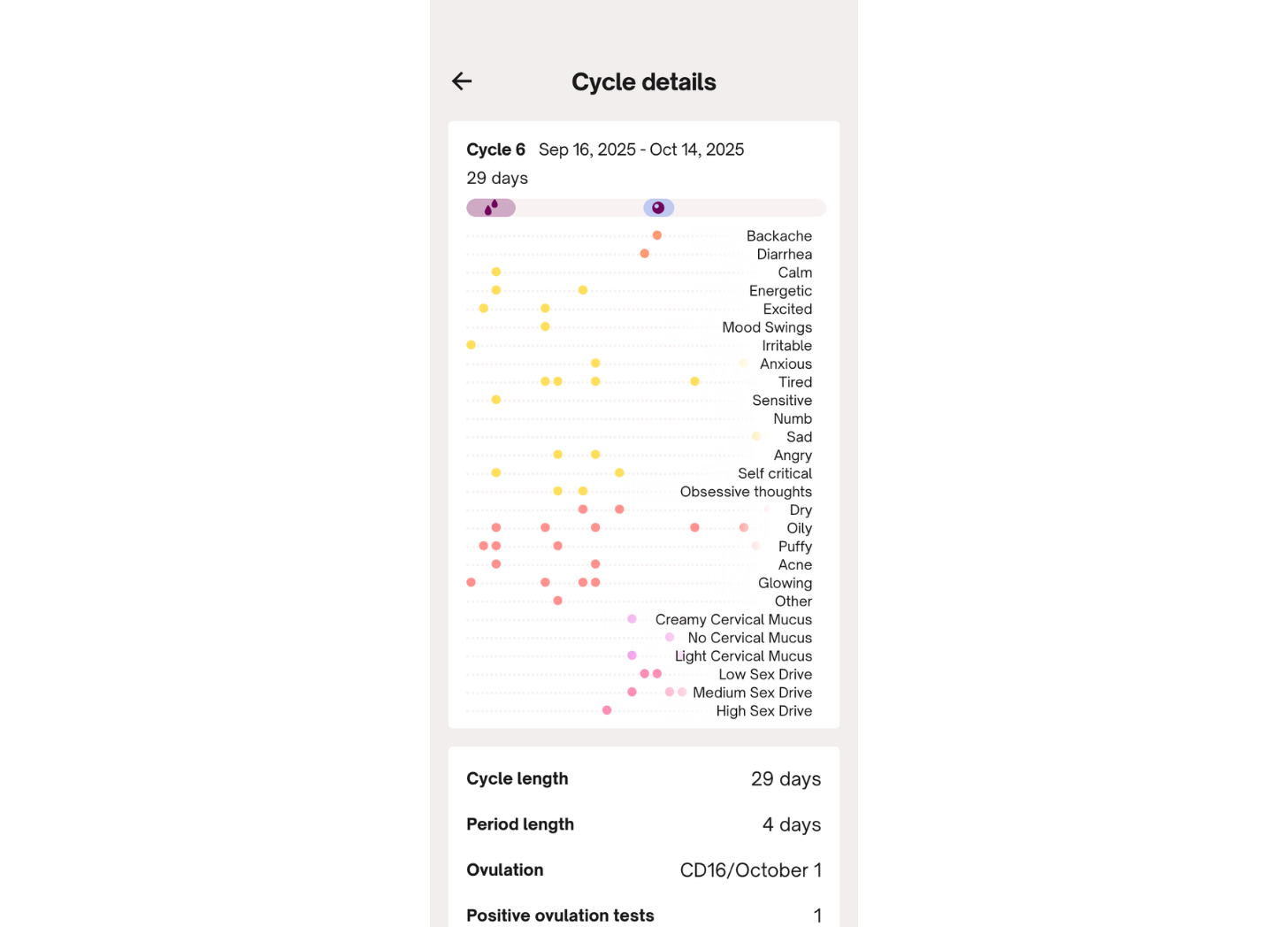
This personalized approach is also why I’m such a strong advocate for tracking beyond just period dates. When women log exercise, nutrition, sleep, and symptoms over time, they’re better able to notice meaningful trends and make adjustments that actually support their bodies, rather than working against them.
As for timing, the benefits of cycle syncing don’t follow a strict timeline. Some women notice changes within a few weeks, especially if they were previously overtraining or ignoring recovery. For others, it can take a few months to gather enough data, experiment with adjustments, and settle into a rhythm that truly feels sustainable. Ultimately, the goal isn’t perfection. It’s building awareness and flexibility so your fitness routine works with your physiology, not against it.
For athletes training for specific events or women with demanding fitness goals, how do you balance cycle syncing with the structured training plans needed for performance gains?
Structured and performance driven training plans don’t have to be at odds with cycle syncing. In fact, they can complement each other. The goal isn’t to reduce ambition, but to strategically place intensity, recovery, and skill work in phases where the body may be better equipped to handle them.
Recognizing that capacity and perceived exertion can fluctuate across the cycles allows athletes to adjust load, volume, or recovery without losing momentum. This approach can help reduce the risk of overtraining and injury, supporting more consistent long-term progress towards performance goals.
For example, prioritizing strength and high-intensity sessions during phases when energy and recovery tend to be higher, and placing mobility, technique, or active recovery work in lower-energy phases can make demanding programs feel both more sustainable and more productive without compromising results.
Some critics worry that cycle syncing could reinforce outdated ideas that women can’t perform consistently. How do you respond to concerns that this approach might be limiting rather than empowering?
Concerns are understandable, especially given the long history of women’s performance being misunderstood or underestimated down to “that time of the month.” The intention behind cycle syncing isn’t to place limits on what women can do, but to expand the information available to them so they can make more strategic, informed choices about how they train.
Hormonal fluctuations do not mean women are incapable of training consistently or performing at a higher level. Rather, they offer context for why energy, recovery, or perceived effort may feel different at certain points in the cycle. With that understanding, adjustments become tools for optimization.
In practice, that might mean keeping the same training goals, but being more intentional about how sessions are approached. For example, emphasizing mobility and recovery during menstruation while maintaining strength or performance work.2 The aim is greater knowledge, autonomy, and resilience, not limitation.
Not all cycles are 28 days, and many women experience irregular cycles, PCOS, perimenopause, or are on hormonal birth control. How adaptable is cycle syncing for women whose hormonal patterns don’t follow the “textbook?”
One of the most important things to recognize is that there is no “standard” cycle. Data from our survey shows that only 13 percent of women have a 28-day cycle, and that there’s a huge variation in both overall cycle length and length of each phase. That variability is even more pronounced for women with conditions such as PCOS, endometriosis, those in perimenopause, or transitioning on or off hormonal birth control, breastfeeding, or postpartum.
Because of that, cycle syncing is best approached as a personalized, adaptive framework rather than a fixed calendar. Instead of following textbook timelines, the focus shifts to understanding individual patterns, such as changes in basal body temperature, energy, mood, and recovery, and using those signals to guide training, rest, and nutrition. Again, this is why it’s so helpful to use a tool like the Natural Cycles app, which analyzes your biomarker data to provide personalized insights into your cycle. When you can see these shifts in your body over time, you can better understand what approach works best for you.
I’d also stress that while cycle syncing can be a helpful framework, it’s often the day-to-day habits that matter most for hormonal and metabolic health. Consistent, sustainable behaviors tend to have a far greater impact than perfectly aligning workouts to a specific cycle phase.
Regular, moderate movement supports blood-sugar regulation and insulin sensitivity. Prioritizing sleep, since disrupted or insufficient sleep is closely linked to increased stress, poor glucose control, and decreased exercise performance. Eating a nutrient-dense, whole-food diet that emphasizes healthy fats, fiber, quality protein, and cruciferous vegetables to support gut and hormone health. And reducing added stressors such as excess sugar intake, smoking, and vaping, all of which can place additional strain on hormonal and metabolic systems.
When these foundations are in place, cycle syncing becomes less about rigid rules and more about fine-tuning and helping women respond to their bodies with greater awareness rather than chasing perfection.
How should women who are just starting to track their cycles approach this? Should they wait several months to establish patterns before adjusting workouts?
When women first begin tracking their cycles, the most valuable first step is to observe rather than make immediate adjustments. It takes time for patterns to emerge, such as cycle length, phase timing, and recurring symptoms. In general, tracking cycles and symptoms for at least three cycles can provide a more reliable baseline to understand what’s typical for your body, and continuing to track over time can provide even deeper insight into patterns and changes.
Since cycle length and phase duration can vary significantly from person to person, a personalized view is more useful than following a standard model. Once those individual patterns become clearer, it’s easier to make informed, gradual changes to training intensity, recovery, and nutrition.
While there are common trends across cycles, each body still has its own journey, and that often changes over time. Approaching the process with patience and self-compassion helps create a sustainable, long-term relationship with both training and overall well-being, rather than chasing quick fixes.
Everything you just read is free, and I want it to stay that way! But the research behind it—the clinical reviews, the sourcing, and the hours spent making sure every claim holds up—isn’t. If this issue earned your trust, a tip helps me keep earning it.
One paper that assessed cycle syncing through a critical feminist lens warned that there is potential for further perpetuation of misinformation and gender stereotypes.
As an amateur powerlifter, I typically use my period week as my deload because I’m incredibly fatigued and can’t lift as much. This isn’t the case for everyone, however, and I’ve seen people hit PRs on their period. It just depends on the individual.