

How Wellness Became A Market
If the last 50 years have taught us anything, it is that the systems that claim to keep us healthy will not save us on their own.

If you find value in this work, consider subscribing or upgrading to a paid subscription so I can keep making more of it.
I’d also love it if you filled out a quick, 100% anonymous survey to tell me a bit about who you are and what you love (or don’t) about Healthy Futures. Your support keeps this going and truly makes a difference. Thank you for being here.
Have you ever wondered how we arrived at the current state of wellness? How it became less about keeping one another alive under conditions of neglect, and more about buying the right stuff, developing an aesthetic, and “rewiring your brain” to keep up with a culture of constant self-improvement? When did it become untethered from the communities that built its foundation, floating instead into a glossy landscape of routines and aspirational self-making?
The short answer is “around the late 1980s.” The full answer is more interesting.
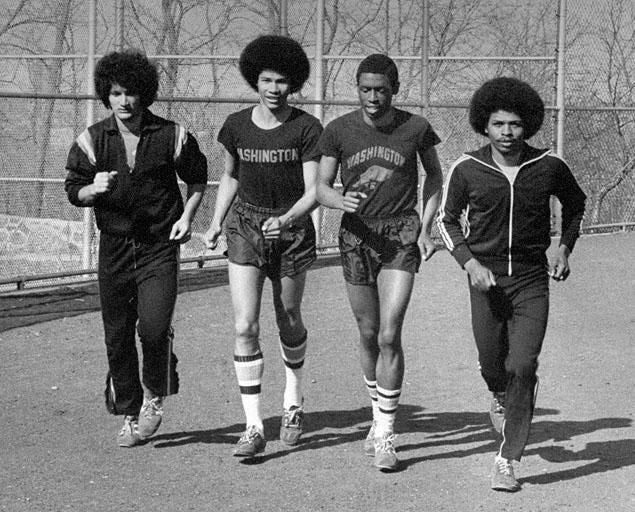
In the 1970s, shaped by the anti-establishment movements of the previous two decades, there was a documented “revival of interest” in alternative medicine and holistic healing. “The ‘secular humanism’ counterculture of the 1960s, with its rebellion against authority, distrust of science and technology, concern for individual rights, and promotion of consumerism, necessarily aroused hostility toward establishment medicine, just as the spirit of Jacksonian democracy had fanned revolt in an earlier age,” wrote medical school professor James C. Whorton. These feelings of dissatisfaction with medicine, which were exacerbated by implicit biases in healthcare, laid the groundwork for a more individualized and consumer-driven approach to health. Take the decade’s “running boom” as an example.
Wellness underwent a neoliberal makeover once Reagan-era policies began eroding public care infrastructure through drastic cuts to Medicaid, community mental health programs, and other critical public health services. As the politics around health and wellness evolved, so did the public’s understanding. The concept of health shifted from viewing health as a right to a personal responsibility, and public health rhetoric increasingly emphasized “lifestyle diseases” and a focus on individual behavior over systemic or environmental factors. This reinforced the notion laid in the previous decade that health outcomes were a matter of personal choice and grit—meaning, if you’re sick, it’s your fault for not working harder.
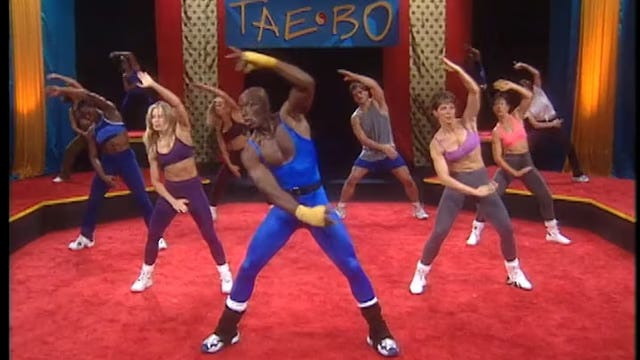
Public approaches to health and well-being also veered from preventative to being centered on physical appearance, specifically weight management. This pivot aligned with the aerobics boom and an uptick in weight loss supplements.


By the 1990s, health and wellness as a capitalist pursuit was in full swing. Fitness clubs were all the rage, Weight Watchers memberships were dominant, and millions of fad diet books were sold. The escalation of capitalistic wellness is aligned with what scholars call the “responsibilization” of the self under neoliberal governance. Or, to put it more plainly, the politics of health and well-being shifted so that individuals were made responsible for solving problems that are actually a result of systemic failures.
Dig Deeper:
Caring for ourselves? Self-care and neoliberalism
Care of the self and subjectivity in precarious neoliberal societies
Digital Self-Control and the Neoliberalization of Social Media Well-Being
What was previously understood as a matter of public policy, community support, and collective care was reframed as one of personal choice, self-discipline, and effort. If you got sick, struggled with mental health, or faced chronic disease, the message became: it’s your responsibility to fix it, and don’t bother pressing the issue on any systemic factors that may have played a role. This shift both obscured the structural causes of poor health and well-being and created a market that promises solutions while leaving the underlying systems that cause harm intact.
In the 2010s, wellness continued its evolution and has since culminated in a whitewashed, gentrified pursuit of aesthetics. See: the political validation of “Make America Healthy Again,” a nationalized wellness movement that rebrands self-care as a patriotic personal project while dismantling public health infrastructure.

The impact of this historical trajectory is playing out in our faces.
By radically slashing the public health workforce and dismantling other critical programs, the current presidential administration has hollowed out core public health capacities. Deregulation of environmental protections will amplify pollution exposure for historically marginalized communities, compounding health disparities. The elimination of health equity programs and the purging of vital public health data erases visibility of these inequities and others.
The ledger persists and persists, and it presents us with a nasty paradox. At the very moment when trust in scientific authorities and institutions is actively eroding, people will turn to supplements, fitness routines, influencers, and other lifestyle products to manage conditions created or exacerbated by structural neglect. It will be overwhelming. It will feel inescapable, especially if you spend a lot of time online, but all hope is not lost. It never is.
In every decade, even in the harshest political climates, people have built networks of care that refuse the myth of individual responsibility and insist that well-being is always collective.

If the last 50 years have taught us anything, it is that the systems that claim to keep us healthy will not save us on their own. The work of sustaining one another has always come from the ground up, through neighbors, organizers, workers, and community builders who recognize that care is a practice, not a commodity. And that practice is still alive.
CDC Mutual Aid is working to support public health workers who have been laid off due to the Trump Administration’s prioritization of ideology over science. There’s a current uptick in community fridges, which is part of the work to help fight food insecurity. Urban farming collectives, such as Harlem Grown, are giving away produce for free and teaching community members how to grow their own food. If you have a broader definition of wellness, like I do, perhaps you can see the thousands of people fighting for their neighbors against ICE as a way of prioritizing community well-being, too.
This is where the future of wellness actually lives, in the ordinary and radical acts of people who refuse to abandon one another. If we want a wellness culture that answers to the world we are living in, then our task is not to buy our way out of a collapsing system. It is to strengthen the bonds that have always kept us alive.
Really insightful piece. Thank you.
Such a great read and your writing?🔥 I instantly read or bookmark your posts when they hit my inbox!