

The Louisiana Cup Cure Is Older Than the Country That Mocked It
A viral TikTok, a Black grandmother’s remedy, and the double standard between whose medicine gets called “cutting edge” and whose gets called witchcraft.

Healthy Futures is free to read and always will be. Paid subscribers get Wellness Debrief and access to the subscriber chat. If you’re not ready for that but want to support the work, you can also leave a tip via PayPal. Now, let’s get into it.
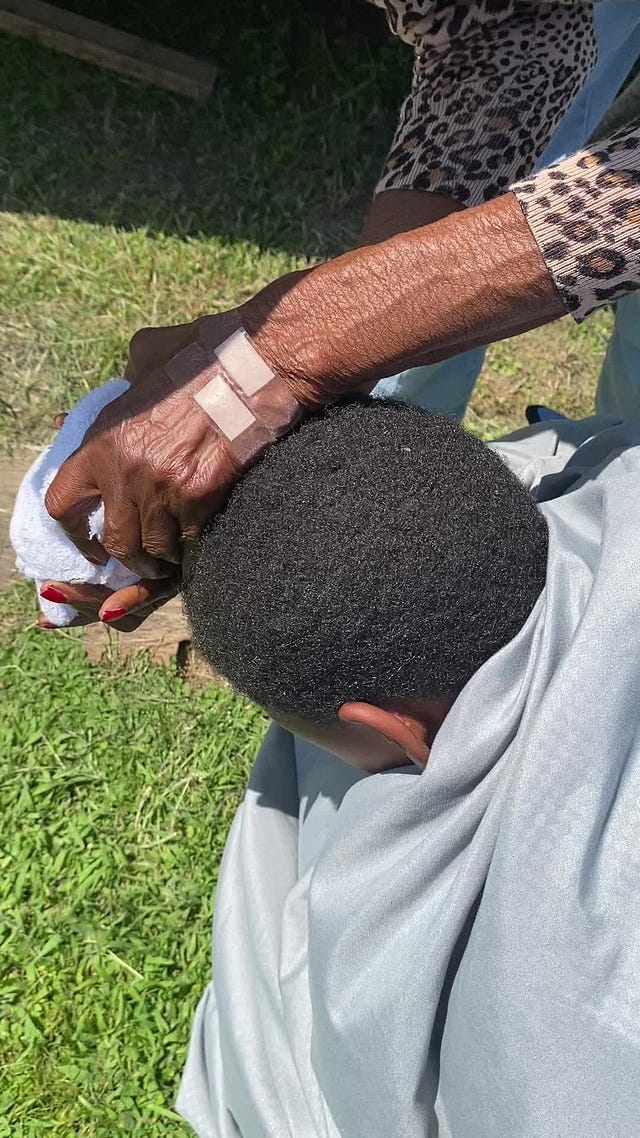
The Louisiana Cup Cure involves placing a glass of cold water upside down on the head, with a towel in between, to treat heat exposure and headaches. I’d never heard of it until I saw a video on Twitter in December, but I understood the principle as someone who’s had migraines since I was seven. When you feel like you’ve just been punched in the face by Thanos, a cool rag over your head, however it’s cooled, is akin to a forehead kiss from God. Still, my curiosity about Black ancestral healing practices got the better of me, so I went and found the original TikTok video.
 Tiktok failed to load.
Enable 3rd party cookies or use another browser
Users in the comments said their elders did the same for them in Brazil, Mississippi, Texas, and elsewhere across the American South. Then, a few follow-up searches on the platform led me to several creators who pretty much confirmed this is an old hoodoo practice, which is what I figured.
That’s why the reactions to the cup cure I saw on X were so disappointing.

I’m always let down when people call Black ancestral knowledge “stupid.” But this moment bothered me more so than usual because the denigration was rooted in seeing a Black woman practicing a Black folk remedy, and that was enough for a significant portion of the internet to dismiss it as superstition, at best, and idiocy, at worst. Writing Black folk medicine practices off as “superstitious” has never been a neutral observation. It was used to dehumanize enslaved Africans, suppress their religious practices and the cultural offspring that arose from them in the Americas, and frame complex systems of knowledge as primitive.
Besides, the gag is that the cup cure isn’t bunk, scientifically speaking.
Before I get into the research, we need to note the difference between a migraine and a headache since the majority of the data I found focuses on migraine, which is more severe. I’m going to let this cool graphic from Tandem Clinical Research do it for me:
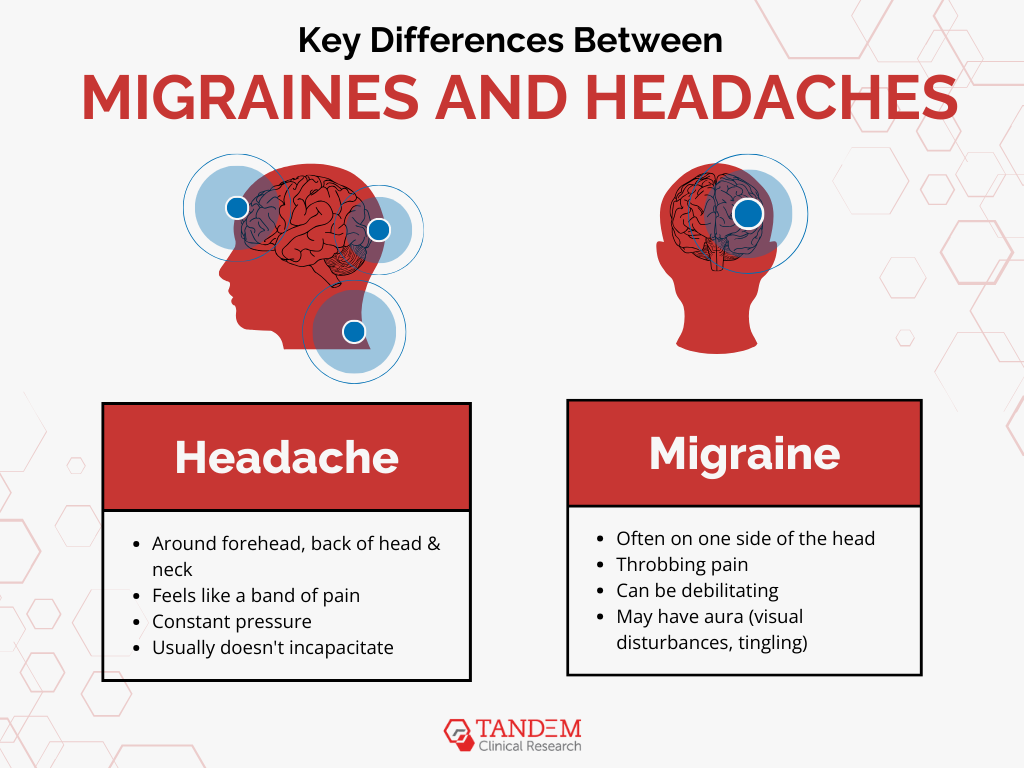
Migraines almost always require medication in addition to any home remedies. Now, the data!
Mechanically, the cup cure is doing two things at once. First, it’s providing a localized cold compress—a method for treating headaches that has been documented for at least 150 years—that lowers skin temperature and constricts blood vessels, reducing the transmission of pain signals to the brain. Second, there’s a mild suction element, since the inverted glass creates a partial vacuum against the towel and scalp, a principle shared with cupping. There are two types of cupping: dry and wet. The former involves creating suction between the cup and the skin using heat or by sucking air out of it, while the latter is the same process, except that small incisions are made in the skin beforehand, and the recipient bleeds.
A 2024 analysis found an 83 percent improvement in migraine symptoms among patients who received cupping therapy, with wet cupping alone showing the strongest results. Still, the research in this area is limited, more rigorous trials are needed, and pain medication offers the best relief for a migraine. As for the other half of what the cup cure is likely doing, cold therapy for head pain has stronger evidence behind it. Frozen neck wraps targeting the carotid arteries reduced migraine pain by nearly 32 percent within 30 minutes, according to a 2013 study, and the short-term benefits of cold therapy were further confirmed by a 2023 meta-analysis.
But, as I said, if you’re a migraine patient or if you have frequent headaches, you already know about the additional relief provided by cold therapy, cupping, or other tension-relieving practices. What you may not have known is that there’s a strong ancestral history behind the mechanics of the cup cure, too.

I couldn’t find documentation of cold therapy being practiced by Black folks in the American South. That likely says more about what got recorded and by whom, and the limitations of online research into historical documents, than about what was actually practiced, since there is strong evidence that cold therapy was used on the continent and may have survived the Middle Passage.
The Edwin Smith Papyrus, the oldest known medical text, mentions hydrotherapy, and an article indexed in PubMed lists the practice as a core component of African traditional medicine. Research published in the Journal of Advanced Research in Humanities and Social Sciences explains that practitioners used cold and hot baths, as well as steam, to treat fever, headache, and pain.
While the provenance is debated, and some research attributes it to European colonists, “cooling” the practice of drawing excess heat from the body to restore balance, is a foundational principle of traditional medicine across the Caribbean. In Brazil, the Candomblé tradition, brought over by enslaved Yoruba people, includes herbal baths and head treatments used to address what practitioners call “doenças da cabeça” (illnesses of the head). One such practice, borí, involves applying preparations directly to the head to care for the ori, the seat of consciousness. The “cooling” is spiritual as much as physical, but the principle is familiar: when the head is disturbed, you restore balance by drawing the heat out.
There’s also plenty in the literature about cupping.
Though in the mainstream it’s often directly correlated with Traditional Chinese Medicine (TCM), applying suction to the skin is cross-cultural and among the oldest documented medical practices in the world. It appears in the Egyptian Ebers Papyrus from 1550 BC, in TCM texts dating to the Jin dynasty, in Islamic medical tradition as hijama, and throughout Africa, where practitioners used animal horns.
These practices didn’t stay on the other side of the Atlantic either. In Medicine and Healing in the Age of Slavery, historian Mary Hicks documents how Black barber-surgeons in Brazil adapted West African healing traditions of bleeding and cupping. In the American South, the practice was used by white doctors and enslaved Black folks. Historian Sharla M. Fett in Working Cures: Healing, Health, and Power on Southern Slave Plantations mentions it briefly: “If a client was bedridden, the conjurer performed curing rituals at the bedside, using cupping horns, songs, and massage to withdraw the offending snakes, lizards, or other reptiles from the sick person’s body.”
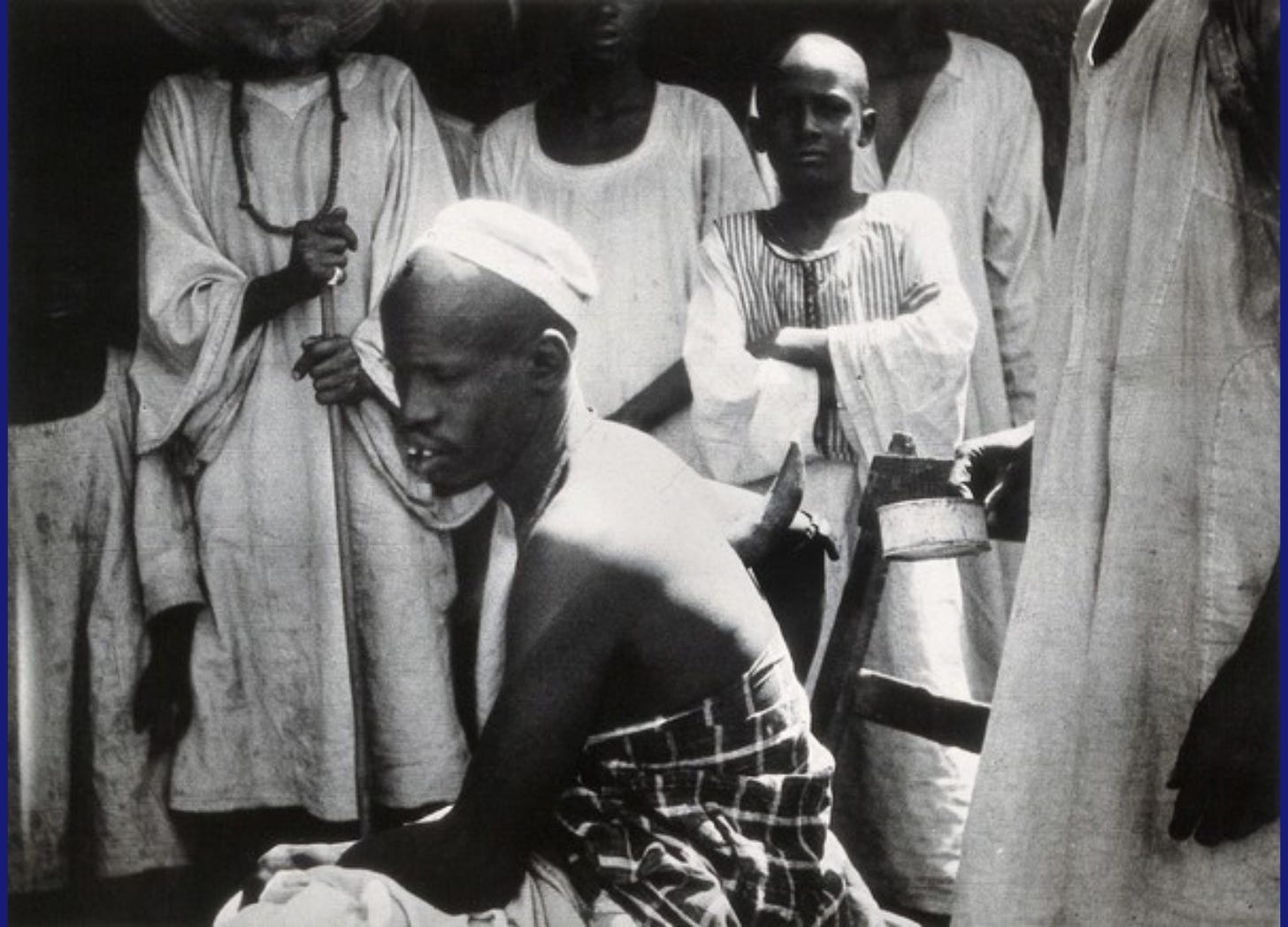
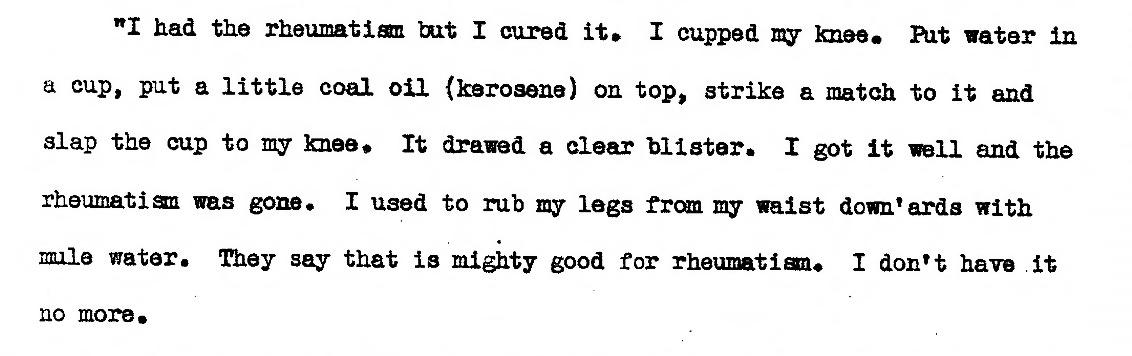
I wanted more information than that, though. After a short dive through the narratives of formerly enslaved people from the Federal Writers’ Project1, I found Lucy Key’s recollection healing her rheumatism by cupping. It was also the most direct correlation to the Louisiana cup cure I found:
In another narrative, where Morris Sheppard mentioned that the plantation where he was enslaved didn’t allow the practice:

It’s worth noting that, generally, cupping, especially if it involved bloodletting, wasn’t preferred by most Southerners, according to historian Lindsey Stewart’s research in The Conjuring of America: Mojos, Mermaids, Medicine, and 400 Years of Black Women’s Magic. Still, the Louisiana Cup Cure sits in this lineage and is rooted in knowledge that predates the country in which it was practiced.
This brings us back to the reactions online.
Cupping has been steadily gaining mainstream Western credibility for years. Gwyneth Paltrow is often credited with the practice’s original ascension in 2004, when she was photographed on a red carpet with the distinctive round bruises on her back. Twelve years later, Michael Phelps threw it back into the mainstream when he showed up to the 2016 Olympics covered in cupping marks. Some insurance plans now cover acupuncture, and TCM practitioners are licensed in most states.
Cold therapy has followed a similar trajectory. Cryotherapy chambers, where you stand in subzero temperatures for two to three minutes, have become a staple of elite athletic recovery and high-end wellness spas. Ice baths went from niche biohacking to mainstream wellness content after figures like Wim Hof and Andrew Huberman popularized a practice that is also indigenous. The basics of the science are the same as those behind a grandmother in Louisiana placing a glass of cold water on her grandson’s head.
Black ancestral medicine didn’t fail to produce knowledge. It was failed by the institutions that decide what counts as knowledge. The Louisiana Cup Cure works the way a cold compress works, the way cupping works, the way generations of Black grandmothers knew their methods worked before anyone with grant funding started to ask why.
The difference isn’t the evidence. It’s whose hands are holding the cup.
Everything you just read is free, and I want it to stay that way! But the research behind it—the clinical reviews, the sourcing, and the hours spent making sure every claim holds up—isn’t. If this issue earned your trust, a tip helps me keep earning it.
The Federal Writers’ Project slave narratives are among the largest surviving bodies of testimony about enslavement, but they’re complicated sources. For a thorough examination of this, I recommend Rebecca Onion’s 2016 piece in Slate, which reviews historian Catherine Stewart’s book Long Past Slavery: Representing Race in the Federal Writers’ Project.
Stellar research and writing!