


Howdy,
September was a busy month for the Library. We’ve added 13 new materials—many in part to submissions! How exciting! I love that this project is so communal, which I wanted, and seeing that manifesting makes me very happy.
Okay. Let’s explore the shelves.
✨ My Fave Finds
Healing from Hurricane Katrina, 20 Years Later
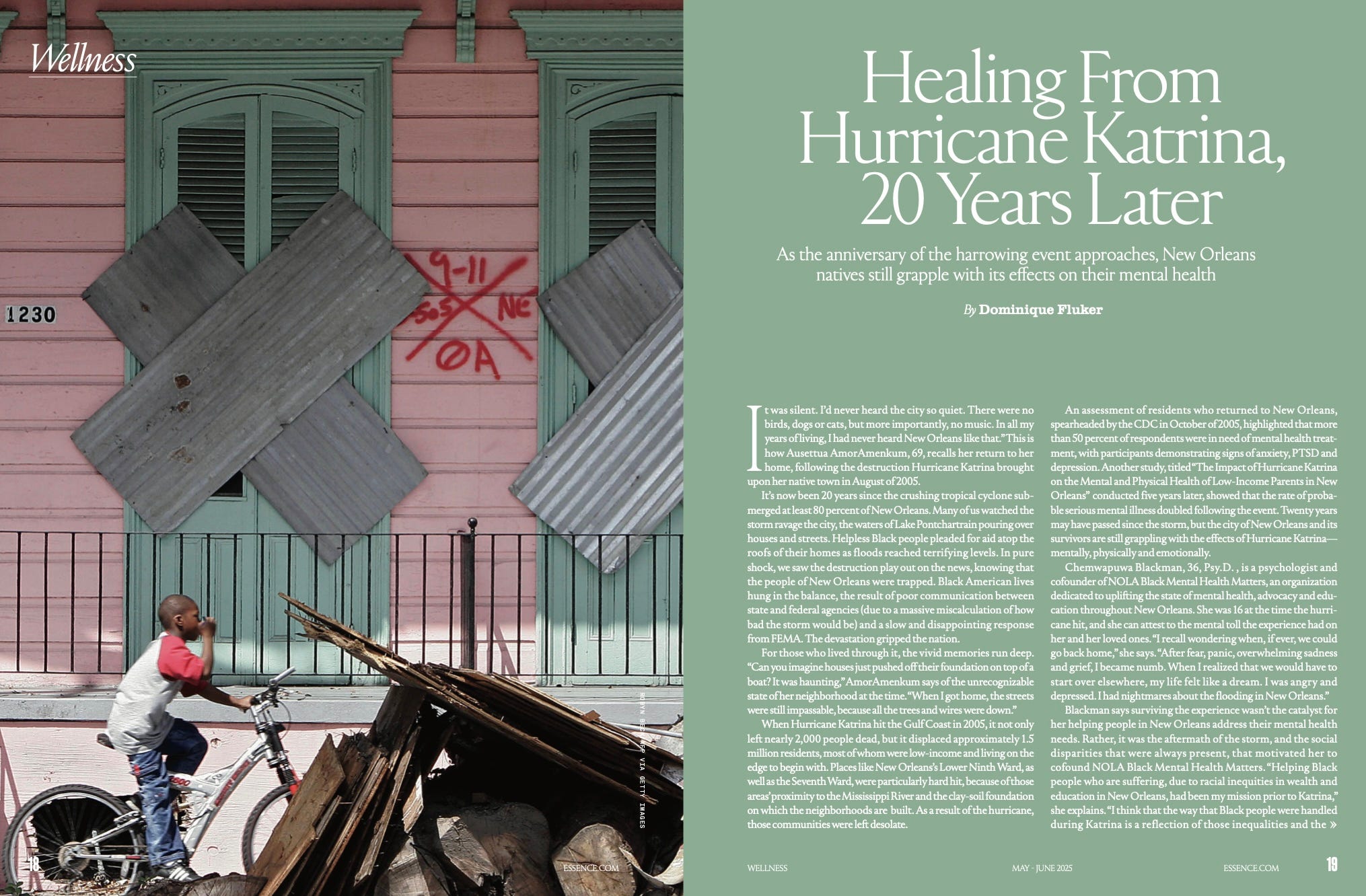
I enjoyed this story—works pertaining to Hurricane Katrina’s aftermath were missing from the Library, and that omission was glaring to me. In this piece, author Dominique Fluker explores how Hurricane Katrina survivors are coping with mental health challenges like PTSD, depression, anxiety, and grief 20 years later. The story also looks at how the broader lack of access to mental health care in Black communities has compounded the trauma of the disaster.
Five Articles from Negro Digest/Black World
Negro Digest was a groundbreaking Black American publication founded in 1942 by John H. Johnson, the visionary behind Ebony and Jet magazines. Modeled after the Reader’s Digest, it began as a platform to highlight the achievements, perspectives, and cultural contributions of Black Americans during a time when mainstream media largely ignored them. In 1970, the magazine was renamed Black World, marking a shift toward a more radical and Pan-Africanist editorial tone. Under the influential editorship of Hoyt W. Fuller, Black World became a key voice of the Black Arts Movement, publishing essays, poetry, and critical writings by significant figures such as Amiri Baraka, Gwendolyn Brooks, and Sonia Sanchez. It served as both a cultural archive and a forum for political thought, reflecting the evolving consciousness of the African diaspora. Though it ceased publication in 1976, Negro Digest / Black World remains an essential artifact of Black literary and intellectual history.
These are the oldest materials featured in the library, and while reading through them, I was fascinated by how our elders and ancestors discussed well-being. One piece, called In Defense of Chittlins (April 1950), uses a dish often admonished for consisting of pig intestines as a way to argue that there is no “Negro diet”—just a “nutritionally adequate” Southern diet—which, in turn, subverts claims that poor dietary choices are what lead to adverse health outcomes among Black Americans. It also notes that chitlins and other organ meats contain essential vitamins. Another, entitled Folks Do Get Born (August 1946), chronicles the work of granny midwives and the systemic influences preventing more from picking up the profession.
The remaining pieces include:
Dr. George Washington Carver (July 1944): George Washington Carver’s legacy goes far beyond peanuts. His work in sustainable farming, natural remedies, and community health made him a pioneer in holistic science—blending agriculture, wellness, and environmental care to uplift entire communities.
My Africa (August 1946): Mbonu Ojike offers a vivid, first‑person account of his life in southeast Nigeria that blends autobiography with a sharp critique. He defends indigenous culture and argues for dignity and cultural self‐respect. In this excerpt, the focus is on food culture in Nigeria.
One Half the People (November 1949): A story about an Ivory Coast medicine man who combined the ancient wisdom of African traditional medicine—which included a deep knowledge of herbs and medicinal uses for dirt—with modern practices to combat tuberculosis and other diseases present in the populations he served.
📚 More New Additions
Radical Self-Care, explained by Angela Davis
Fun fact: The Black Panthers popularized the concept of taking care of oneself as a way of taking care of one’s community and turned it into action.
Academic Articles
“A Kind of Restoration”: Psychogeographies of Healing in Toni Morrison’s Home (August 2014)
The Restorative Power of Sound: A Case for Communal Catharsis in Toni Morrison’s Beloved (April 2007)
News Articles
This New App Connects Women Of Color Facing Infertility — And Builds Hope Along The Way
Black Girl Wellness: A New Cultural Renaissance
How ESSENCE And Black Women Are Prioritizing Pleasure
Motherhood On Rikers Island: Inside The Jail’s Doula Program For Incarcerated Moms
🌿 This Month’s Long Read
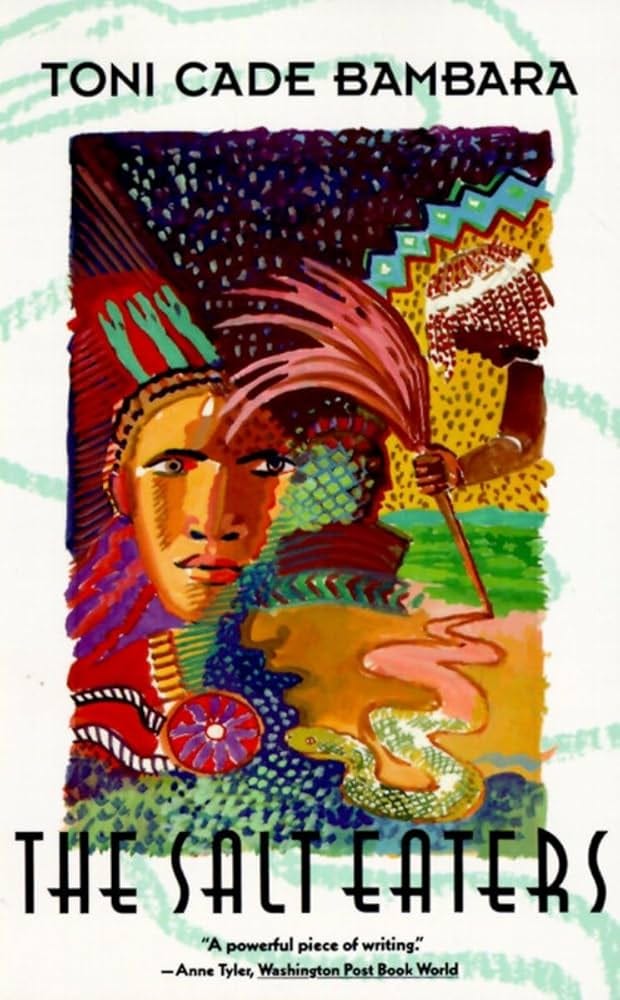
Gloria T. Hull wrote, in my opinion, the best analysis of The Salt Eaters:
Reasons for studying the novel are weighty. It is a daringly brilliant work which accomplishes even better for the 1980s what Native Son did for the 1940s, Invisible Man for the 1950s, or Song of Solomon for the 1970s: it fixes our present and challenges the way to the future. Reading it deeply should result in personal transformation; teaching it well can be a political act. However, Toni Cade Bambara has not made our job easy (because our job is not easy). Salt is long, intricately written, trickily structured, full of learning, heavy with wisdom-is, altogether, what critics mean by a ‘large’ book.
It is a challenging read, but this book also changed my life and my way of thinking about the labor that goes into protecting myself and my well-being. When you’re pulled in multiple directions, as Velma Henry, the protagonist, was for most of her life, you must accept that achieving and maintaining wellness will be hard work. Instead of writing a summary of The Salt Eaters, which is what I would usually do, I wanted to share resources that helped me work through the ideas presented by Toni Cade Bambara when I first read the book—including Hull’s piece What It Is I Think She’s Doing Anyhow: A Reading of Toni Cade Bambara’s The Salt Eaters (PDF, pgs. 185-202)
The Weight in Being Well: The Salt Eaters and the Genius of Toni Cade Bambara
That’s all for this month, gang. See you soon.
— Juju