

The Healthy Futures Syllabus
January’s Living A Better Life Resources is a comprehensive collection of tools, texts, and practices that are foundational to understanding and living this work.

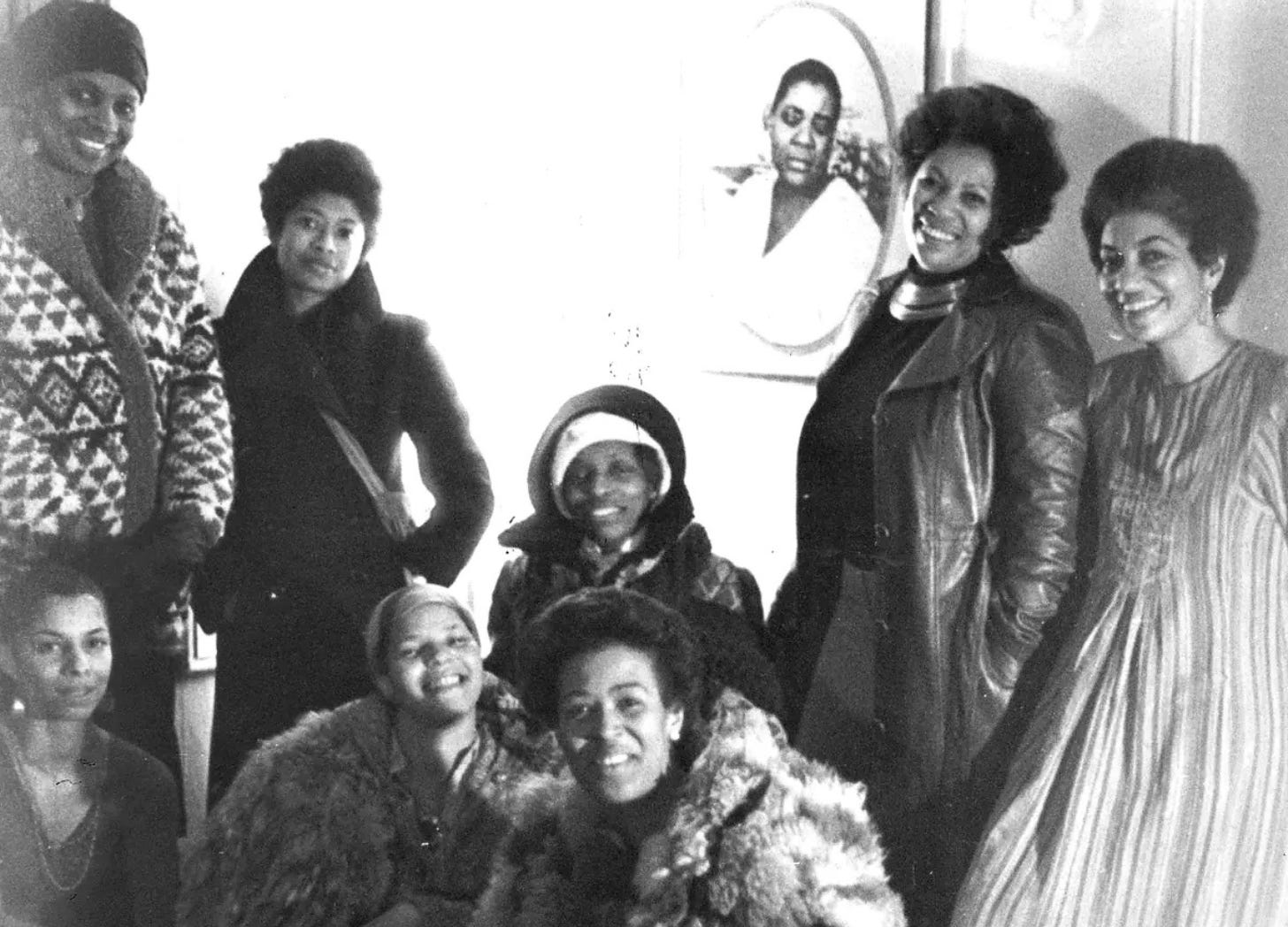
I’ve been a bit obsessed, possessed even, with the idea of putting together a syllabus. The concept is everywhere online, and the sheer ubiquity of the trend got to me. It also makes sense for a newsletter like this one, which holds the foundational works and their writers in the health, history, and wellness through the lens of race and policy space with reverence, to put together a living document of resources.
I believe those listed below to be crucial to understanding and benefiting from this labor of love. I return to these when I want to be more innovative in my work without buying into the logic of constant self-improvement. But, in true Julia Craven fashion, I wanted to take this document beyond the confines of what’s featured in an actual syllabus—so I’ve included habits, technological tools, research-backed practices, and a section dedicated to creative nourishment, as well. The purpose is to serve up a comprehensive, textual vision board, so to speak—one that leaves you inspired, empowered, actionable, and more educated on the social, political, and emotional complexities of being well in America.
I offer these to you with the understanding that health is more than an individual achievement. It is something deeply influenced by systems, culture, environment, community, and power. And, as long as you’re here, you are not in it alone.
Last updated: January 6, 2026

Readings
Necessary:
Bambara, Toni Cade. The Salt Eaters. 1980.
Blackstock, Uché. Legacy: A Black Physician Reckons with Racism in Medicine. 2024.
Hedva, Johanna. “Sick Woman Theory.” 2016.
Kimmerer, Robin Wall. Braiding Sweetgrass: Indigenous Wisdom, Scientific Knowledge and the Teachings of Plants. 2013.
Lakshmin, Pooja. Real Self-Care: A Transformative Program for Redefining Wellness (Crystals, Cleanses, and Bubble Baths Not Included). 2023.
Lorde, Audre. A Burst of Light: And Other Essays. 1988.
Lorde, Audre. “The Master’s Tools Will Never Dismantle the Master’s House.” 1979.
Mukhopadhyay, Samhita. “My Job Was My Life. Then I Got Fired.” 2024.
Odell, Jenny. How to Do Nothing: Resisting the Attention Economy. 2019.
Roberts, Dorothy E. Killing the Black Body: Race, Reproduction, and the Meaning of Liberty. 2017.
Stewart, Lindsey. The Conjuring of America: Mojos, Mermaids, Medicine, and 400 Years of Black Women’s Magic. 2025.
Washington, Harriet A. Medical Apartheid: The Dark History of Medical Experimentation on Black Americans from Colonial Times to the Present. 2008.
Recommended:
Ahmed, Sara. “Selfcare as Warfare.” 2014.
Butler, Octavia E. Parable of the Sower. 1993.
Craven, Julia. “A Healthy Future Requires Economic Justice.” 2025.
Craven, Julia. “The Ancestral Practice of Doula Care Could Be the Future of Maternal Health for Black Moms.” 2025.
Houseworth, Lenora E. “How the Black Panthers Revolutionized Self-Care.” 2021.
Huddleston, Qubilah. “Black Women Get to Be.” Substack.
Jamison, Mikala. “Body Type.” Substack.
Pridgett, Tamara. “Reimagining Wellness.” Substack.
Rosenthal, Elisabeth. An American Sickness: How Healthcare Became Big Business and How You Can Take It Back. 2017.
Scocca, Tom. “Unraveling My Medical Mystery.” 2024.
VonChaz, Chelsea. “Menärchē By. Chelsea VonChaz.” Substack.
Habits
Morning sunlight: Spending at least 10–15 minutes in natural sunlight, especially in the morning and without sunglasses, helps improve alertness, balance energy levels, regulate your circadian rhythm, and support your sleep-wake cycle.
Mindfulness practices: The available research shows that meditation helps reduce stress and improve physical well-being. It also activates the parasympathetic system, reduces cortisol levels, and fosters a sense of calm and emotional clarity. Over time, consistent mindfulness can improve focus, reduce inflammation, and build resilience. (I practice breathwork and meditate most days of the week. Another close friend of mine sits in silence for 30 minutes every day upon waking.)
At least 8,000 steps a day: Walking is one of the most accessible and low-impact ways to support heart health, improve circulation, and reduce the risk of chronic illnesses. Getting your steps in supports digestion, reduces inflammation, and improves cognitive function. We often hear that we need to take 10,000 steps per day. This number is a marketing gimmick; you don’t need to get in that many. But if you’re younger than 60, hitting at least 8,000 steps daily is a good goal for getting the most benefit out of walking.
Between seven and nine hours of sleep every night: Sleep is foundational to physical health, emotional regulation, and cognitive performance. Adequate sleep supports immune function, hormone regulation, memory consolidation, and mental health, while chronic sleep deprivation is linked to increased risk of cardiovascular disease, metabolic disorders, and depression.
Reducing screen time: A month-long study in which people blocked internet access on their smartphones for two weeks found that 91 percent of the 467 participants reported improved mental health, well-being, and attention spans after the break. There was also a decrease in depressive symptoms.
Weekly strength training: Lifting weights at least three times a week can lead to improved muscle mass and metabolism, healthier aging, increased bone density, enhanced mental health, better insulin resistance, a lower risk of chronic disease, improved sleep, reduced risk of injury, and enhanced cognition.
30g of protein and 10g of fiber per meal: Protein and fiber work synergistically to keep you healthy. Fiber will regulate blood sugar, support digestion, reduce the risk of developing cancers, feed your gut bacteria, and keep you pooping regularly. Eating more of it is also associated with a decreased risk of developing colon cancer. Protein reduces hunger, improves energy, lowers blood pressure, improves bone density, and helps maintain muscle mass, which is especially important as we age. It’s unlikely that you need 200 grams of it every day. Here’s a useful post to help calculate how much you need.
Creatine supplementation: Creatine is a well-studied supplement that helps muscles produce more energy during high-intensity workouts. For women, creatine supports strength gains, recovery, and cognitive health. It’s beneficial for preserving lean muscle mass, which becomes harder to maintain with age.
Annual exams: Dental cleanings every six months. STD testing every three months. An annual skin check provides an assessment of any skin abnormalities, especially moles. It’s quick, painless, and crucial—especially if you’re melanated, because skin cancer often gets caught too late in us. An annual visit to the gynecologist typically includes a pelvic exam and/or Pap Smear, a breast exam, and any discussions about changes in the reproductive cycle. Getting a physical and a full blood panel lab test each year provides a sense of your overall well-being.
Tech Tools
While I’ve used all of these, the apps I’m currently using have an asterisk next to them.
Are.na*: A non-algorithmic research and inspiration platform for collecting links, images, and texts in a way that supports slow, associative thinking. Free with paid tiers available for those looking for more advanced curation features.
Pinterest*: A visual platform useful for collecting ideas, references, and visual inspiration across all areas of daily life. Free.
Open*: A meditation, breathwork, and movement app that might be among the most niche mobile wellness offerings available. $8/mo for Strava subscribers, $20/month, or $150/yr following a 30-day free trial.
Ladder*: A structured, coach-led workout app where you choose a team based on your goals and follow clear, progressive weekly programming designed to build strength and consistency without guesswork. $29.99/mo or $179.99/yr.
Chani*: An astrology app that frames daily, weekly, monthly, and annual readings around self-reflection, emotional awareness, and agency. Limited free access, with optional subscription for $11.99/month or $107.99/year.
Strava*: A fitness tracking app that logs runs, rides, and walks while emphasizing longitudinal progress over isolated workouts. I appreciate the amount of health data it provides based on my heart rate zones. Limited free access, with optional subscription for $11.99/mo or $79.99/yr following a 30-day free trial.
Opal*: A screen time management app that helps reduce phone use by blocking distracting apps during chosen focus sessions or rest periods. After the premium free trial, I decided to keep using the free version, which works well for my needs. Limited free access, with optional subscription for $19.99/mo or $99.99/yr following a seven-day free trial.
InsightTimer: A meditation and mindfulness app offering an extensive free library of guided sessions, music, and talks for stress reduction and sleep support. Robust free access, with optional subscription for $9.99/mo or $59.99/yr.
HabitShare*: A simple habit tracking app that allows users to share progress with friends for accountability without the pressure of gamification. Free.
Libby*: An app that lets users borrow ebooks and audiobooks from public libraries using a library card. Free.
Creative Nourishment
A list of things that enhance the creative in me.
Print:
STUDIO NOTO world by Gloria Noto
The Library of Black Wellness (Archive)
What It Is I Think I’m Doing Anyhow (Essay by Toni Cade Bambara)
Visuals:
bell hooks at The New School (Video Series)
Practices:
Knickknacks:
Legal pads for drafting, brain dumping, list making, and working through ideas.
Paper Mate InkJoy gel pens for their smooth, consistent ink flow that isn’t too gel-y.
Leuchtturm1917 journals for thicker pages and a built-in page numbering structure that makes it easy to return to where I last left off.
This is amazing, thank you!
Everyone say, "Thank you, Professor Juju!"