

Wellness Debrief 002: ‘Who the F*ck Wants To Live Forever?’
Bryan Johnson does.

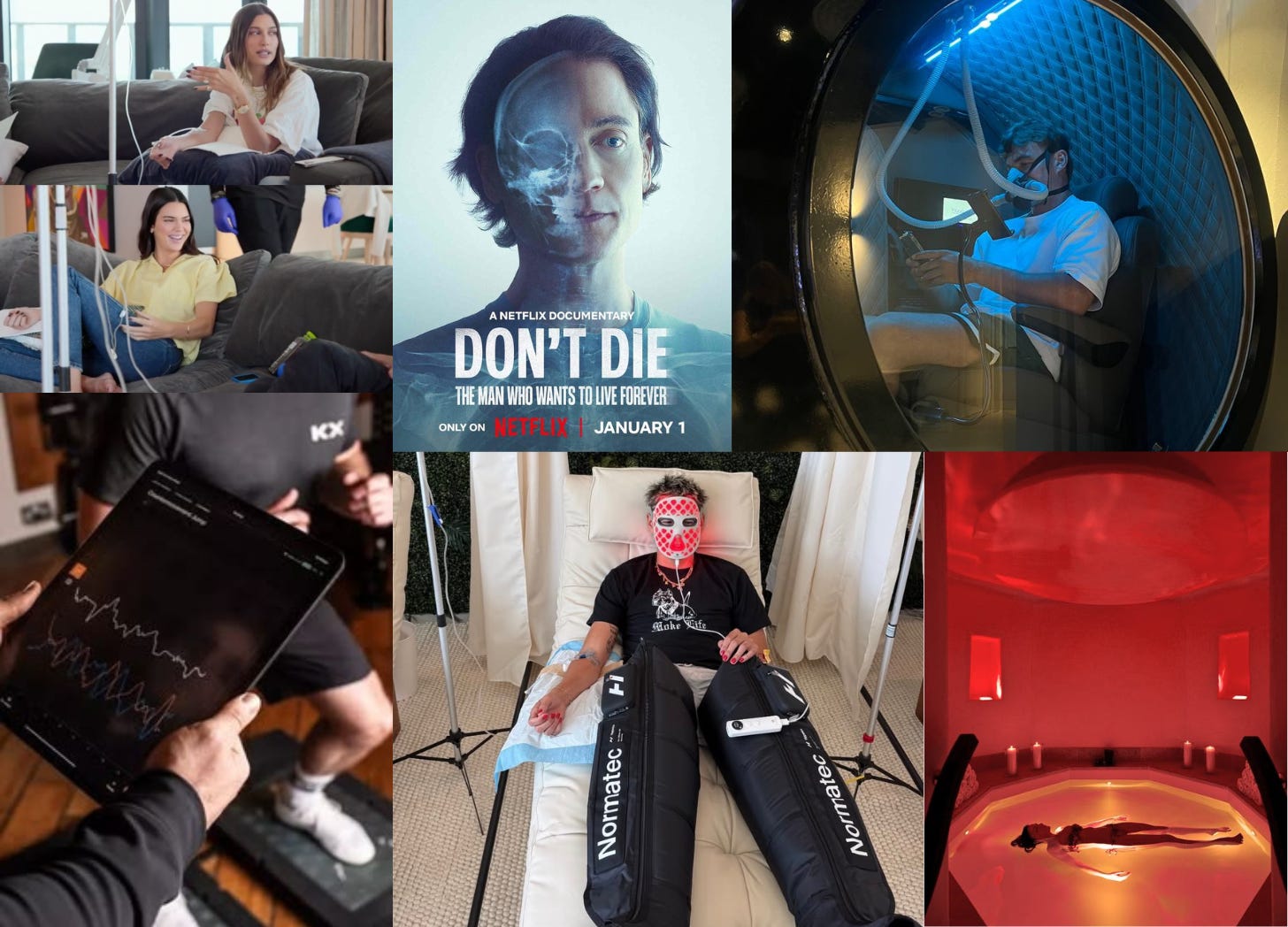
Did you know that the longest a human can live is 125 years? Cool, right? Next question: Would you want to live that long? If so, have you thought about how you’ll afford it? Have you considered the difference between an extended life expectancy and the rate at which you’re aging? Have you decided what habits you’d build right now to ensure those years are good and healthy, rather than time spent suffering from any number of age-related diseases? (Tell me your answers in the comments!)
Humans are living longer today than in the past, and we’re living better lives. Older people are more mobile than in the past, and some are even improving physically and cognitively as they age. Much of this is due to societal advances such as vaccines, antibiotics, public health infrastructure, sanitation, hygiene, earlier diagnoses, and increased public awareness about health and longevity. Longevity, in particular, has worked to become a “serious” branch of science, and it’s certainly succeeded, but not without fueling some dynamic debates. I don’t think anyone has argued that living longer is a bad thing; what often comes up is how much of it is truly within our control and whether some of the technologies are overpromising or even dangerous.
This issue of The Wellness Debrief, however, looks at a third stance: Even if you could live forever, why would you want to? Hunter Lacey got to the heart of the matter in an essay for Allure, asking, “Who the fuck wants to live forever?” in a society where living a long, comfortable life is out of reach for anyone who isn’t financially well-off. While craving immortality seems bratty and megalomaniac-ish to me, desiring to live a longer, healthier, meaningful life in an equitable society is more than reasonable. As people live into their 80s and 90s, there will need to be an answer for how thriving can be accessible to everyone who does.
Let’s get into it.

Healthy Futures is free to read and always will be. Paid subscribers get Wellness Debrief, The Shelf, and a few paid essays per month. If you’re not ready for that but want to support the work, you can also leave a tip via PayPal.
Saved Articles
Receipts! Proof! Timeline! Screenshots!
Has anyone considered that living longer would increase inequality? When I saw this article from Italy’s leading financial daily, I thought finally something interesting in the wellness discourse. One line that stood out to me:
Longevity is no longer merely a biological issue: it is an economic and social phenomenon, shaped by education, income, employment, environmental quality, preventative care, and access to treatment.
This piece is rooted in a global perspective, but it can easily—perhaps too easily—be applied to the American context. Inequity is rampant here, and it’s a crucial question to ask ourselves with people living longer lives: What will those in power do to ensure those years are good, thriving, and healthy for everyone, not just those who are wealthy, have access to healthy foods, and live in a safe community?
Palantir, a defense company that feeds information to ICE, has access to data from a federal health study. All of Us is a massive research effort that gathers health information from millions of Americans to develop precision medicine, which will help tailor healthcare to the individual receiving it. The goal is to prevent and cure diseases while helping people live longer, healthier lives. This is why Palantir’s involvement is ironic. The Peter Thiel-founded company has ties to the Israeli military—which used the company’s tech in attacks on Gaza and Iran—and they’re incredibly friendly with ICE. The National Institutes of Health and UNC, where the study is hosted, have said the company doesn’t touch the data. Still, it makes sense that people would be skeptical about their involvement in this study and having access to this much human data. (SN: Thiel is another billionaire trying to live forever—and he’s been beating this drum for well over a decade.)
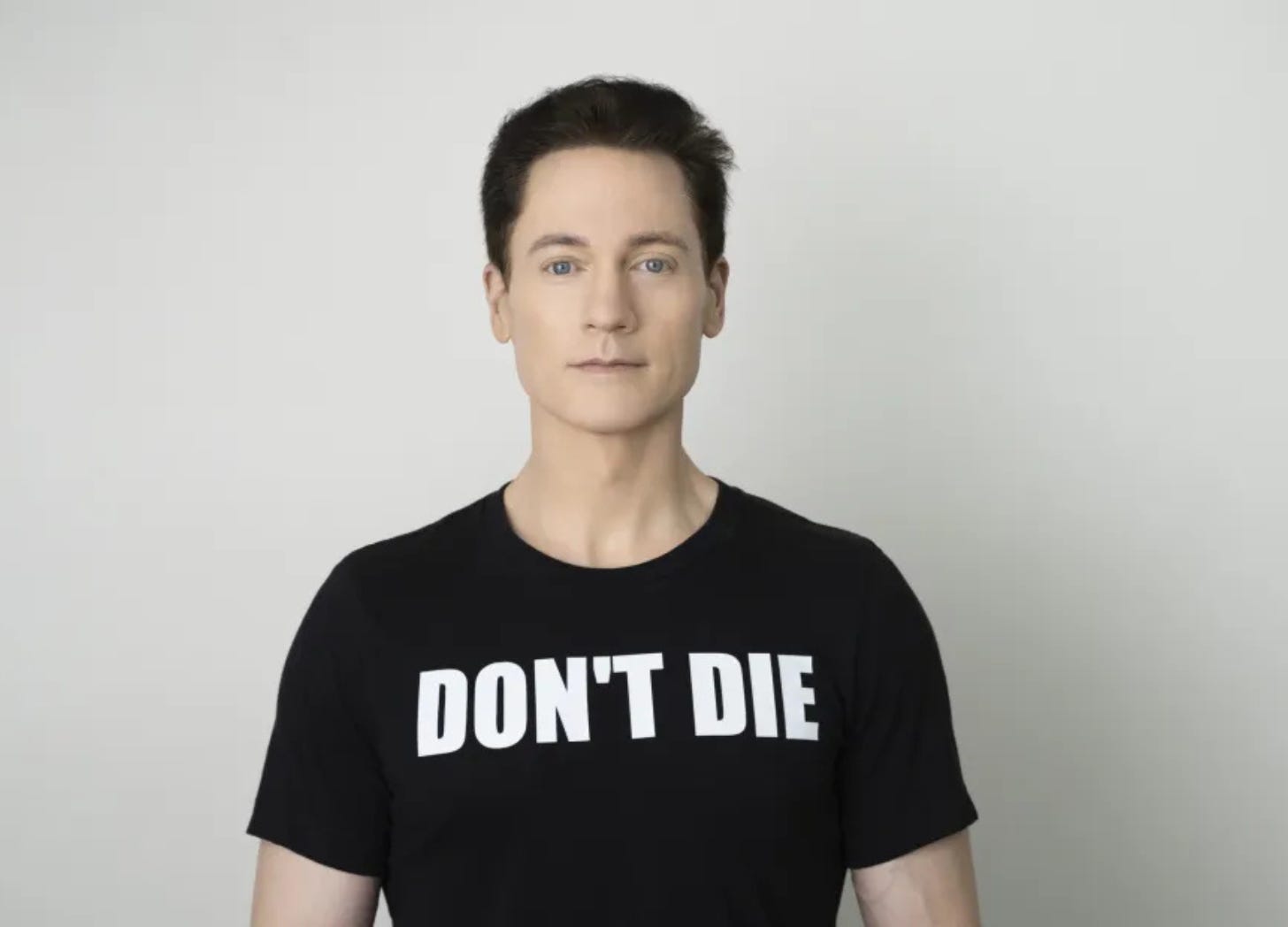
Since it’s the Billionaire Power Hour, Bryan Johnson, who has spent millions of dollars feeding his compulsive need to govern how long he can live, has been diagnosed with an autoimmune disease. Bodies are always gonna body no matter what we do. This is an unfortunate example of the fact that you can’t biohack your way out of disease. While medicine doesn’t fully understand the cause of autoimmune disease, genes and environment play a role in development. Johnson has vowed to find a cure for his autoimmune gastritis. If he does, hopefully, he’ll make it readily accessible to others who need it and can’t afford to throw millions at the problem.
A new study found that Americans are taking more supplements. But instead of reaching for a run-of-the-mill multivitamin, people are tailoring their routines to specific goals. It suggests that people are becoming more engaged with their well-being and designing stacks tailored to their personal health goals.
Trends I’m Judging
I was shocked, honey. I was in tears almost.
Calling everything “maxxing.” This is mainstreaming incel language. Please stop.
Cortisol. If I never heard the word cortisol again, that would be too soon. You don’t need to track your cortisol. Your levels are fine. You don’t have adrenal fatigue. Most of the influencers telling you to watch your cortisol are trying to sell you something—be it a lifestyle or a supplement. Don’t fall for it. (Of course, if you are genuinely worried, see an endocrinologist.)
Meta Glasses. It gives 5-0, I’m (not) sorry! Tech Rader made the case that wearable tech is uncool because it’s becoming an agent of surveillance capitalism. I’m not convinced that it’s uncool—probably because I adore my Oura Ring so much that I ignore their dealings with DoD1—but Meta glasses are definitely a surveillance apparatus. If you wear Meta glasses, I feel like you would snitch me out to asset protection for sneaking a grape at Whole Foods. I mean, you might as well. You’re wearing a camera on your face, and I can barely tell if you’re recording me while I’m just trying to get some cucumbers.
Industry Innovations
Can you believe it, girls?
Scientists have figured out how Alzheimer’s kills brain cells…(Science Daily)
Clinical trials are beginning for an Ebola treatment…(STAT)
A blood test tracking hormone differences could help diagnose endometriosis instead of surgery…(BBC)
A new clinical trial is trying to figure out how to reverse cellular aging…(Yahoo)
Wearables with eye sensors might be useful in monitoring mental health…(Nature)
Juju’s Recommendations
Name ‘em.
G2 Boost pens (sponsored). Everyone is foraying into wellness and science—even stationary companies. Pilot sent over their collection of G2 Boost pens in every colorway. The manufacturers of one of the most iconic gel pens used color science to determine the hues for this collection, since color can affect your behavior, mood, stress levels, energy levels, and how you perceive things. Each pack focuses on a different psychological aspect, so you know which one to use to get the most from your writing session. Reds, oranges, and yellows for energy. Pinks for optimism. Purples for creativity. Greens for balance. Blue for productivity. I gravitate toward blue ink, but I made sure to pull a purple and pink for sketching out creative ideas.

Yanibest adjustable satin bonnets. Blame this inclusion on Love Island promoting how the girls protect their hair at night. I don’t believe in spending a lot of money on bonnets—don’t buy the $25 one from Peacock—because I remember when they were less than $5 at the hair store. But this one from Amazon does get my $14 because it’s very good quality and adjustable, a must for a migraine girl.
Micros
A front-row seat to history!
The EPA just repealed federal limits on toxic power plant emissions
Planned Parenthood Can Access Medicaid Funds Again as Congress Lets Ban Expire
Trump Administration Rolls Back Dozens of Gun Regulations
Texas abortion stories fail to sway Congress post-Dobbs
Finding Reliable Health Information Amidst AI Slop & Postpartum Overwhelm
Don’t judge me! Or do. I’d understand.